



-
Internal Oak Unfinished Farley Classic Framed 100mm Pocket Door Set
Price From: Regular price £374.00Price From: Sale price £374.00Regular price£374.00Unit price per -
 4.9/5 ★★★★★ Customer Rating
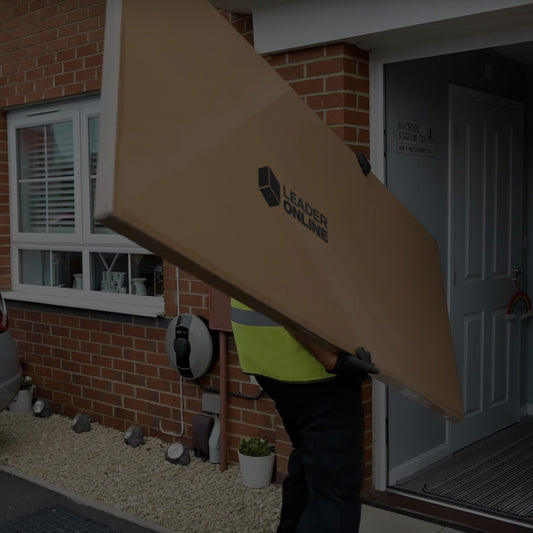
 In-Home DeliveryHomeowners trust Leader Online for quality floors, doors and more.In-home delivery from £19 into your room-of-choice*
 -
Oak Fully Finished Internal Farley Framed 100mm Pocket Door Set (123199)
Price From: Regular price £398.00Price From: Sale price £398.00Regular price£398.00Unit price per -
White Primed Internal Lifestyle Flush Framed 100mm Pocket Door Set (123286)
Price From: Regular price £332.00Price From: Sale price £332.00Regular price£332.00Unit price per -
Internal White Moulded Farley Classic Framed 100mm Pocket Door Set (120823)
Price From: Regular price £337.00Price From: Sale price £337.00Regular price£337.00Unit price per -
White Moulded Internal Lifestyle Ladder Framed 100mm Pocket Door Set (123283)
Price From: Regular price £337.00Price From: Sale price £337.00Regular price£337.00Unit price per -
Clear Pine Unfinished Internal 6 Panel Framed 100mm Pocket Door Set
Price From: Regular price £368.00Price From: Sale price £368.00Regular price£368.00Unit price per -
Clear Pine Unfinished Internal Malton 4 Panel Framed 100mm Pocket Door Set (123185)
Price From: Regular price £368.00Price From: Sale price £368.00Regular price£368.00Unit price per -
White Primed Internal Cottage 1 Panel Framed 100mm Pocket Door Set (123248)
Price From: Regular price £369.00Price From: Sale price £369.00Regular price£369.00Unit price per -
White Primed Internal Trent 3 Panel Framed 100mm Pocket Door Set
Price From: Regular price £369.00Price From: Sale price £369.00Regular price£369.00Unit price per -
Clear Pine Unfinished Internal Shaker 4 Panel Framed 100mm Pocket Door Set (123190)
Price From: Regular price £374.00Price From: Sale price £374.00Regular price£374.00Unit price perSold out -
White Primed Internal Pedrena 7 Panel Framed 100mm Pocket Door Set (123264)
Price From: Regular price £375.00Price From: Sale price £375.00Regular price£375.00Unit price per -
White Primed Internal Toledo 3 Panel Framed 100mm Pocket Door Set (123271)
Price From: Regular price £375.00Price From: Sale price £375.00Regular price£375.00Unit price per -
White Primed Internal Pattern 10 1 Panel Framed 100mm Pocket Door Set
Price From: Regular price £376.00Price From: Sale price £376.00Regular price£376.00Unit price per -
White Primed Internal Shaker 4 Panel Framed 100mm Pocket Door Set (123268)
Price From: Regular price £378.00Price From: Sale price £378.00Regular price£378.00Unit price per -
White Primed Internal 1930's DX 4 Panel Framed 100mm Pocket Door Set (123234)
Price From: Regular price £379.00Price From: Sale price £379.00Regular price£379.00Unit price per -
White Primed Internal Ashton 3 Panel Framed 100mm Pocket Door Set
Price From: Regular price £379.00Price From: Sale price £379.00Regular price£379.00Unit price per -
Oak Unfinished Traditional Victorian 4 Panel Framed 100mm Pocket Door Set (123221)
Price From: Regular price £387.00Price From: Sale price £387.00Regular price£387.00Unit price per -
White Primed Internal 1930's DX 3 Panel 1 Light Obscure Glass Framed 100mm Pocket Door Set
Your price: Regular price £388.00Your price: Sale price £388.00Regular price£388.00Unit price per -
White Primed Internal Pattern 10 1 Light Clear Glass Framed 100mm Pocket Door Set
Price From: Regular price £389.00Price From: Sale price £389.00Regular price£389.00Unit price per -
Oak Unfinished Shaker 4 Panel Framed 100mm Pocket Door Set (123217)
Price From: Regular price £389.00Price From: Sale price £389.00Regular price£389.00Unit price per -
White Primed Internal Victorian Shaker 4 Panel Framed 100mm Pocket Door Set
Price From: Regular price £391.00Price From: Sale price £391.00Regular price£391.00Unit price per -
Clear Pine Unfinished Internal 2 Panel 2 Light Clear Glass Framed 100mm Pocket Door Set (123182)
Price From: Regular price £394.00Price From: Sale price £394.00Regular price£394.00Unit price per -
Clear Pine Unfinished Internal SA 15 Clear Glass Framed 100mm Pocket Door Set
Price From: Regular price £394.00Price From: Sale price £394.00Regular price£394.00Unit price per -
Clear Pine Unfinished Internal Shaker 4 Light Clear Glass Framed 100mm Pocket Door Set (123189)
Price From: Regular price £394.00Price From: Sale price £394.00Regular price£394.00Unit price perSold out -
Oak Unfinished Parma 5 Panel Framed 100mm Pocket Door Set (123211)
Price From: Regular price £394.00Price From: Sale price £394.00Regular price£394.00Unit price per -
Oak Unfinished 1930's DX 4 Panel Framed 100mm Pocket Door Set (123206)
Price From: Regular price £396.00Price From: Sale price £396.00Regular price£396.00Unit price per -
White Primed Internal Shaker 4 Light Clear Glass Framed 100mm Pocket Door Set
Price From: Regular price £398.00Price From: Sale price £398.00Regular price£398.00Unit price per -
White Moulded Internal Lifestyle Smooth Caprice 2 Panel Framed 100mm Pocket Door Set (123285)
Price From: Regular price £398.00Price From: Sale price £398.00Regular price£398.00Unit price per -
Clear Pine Unfinished Internal 2 Panel 2 Light Campion Glass Framed 100mm Pocket Door Set
Your price: Regular price £398.00Your price: Sale price £398.00Regular price£398.00Unit price per -
Clear Pine Unfinished Internal 2 Panel 2 Light Obscure Glass Framed 100mm Pocket Door Set
Your price: Regular price £398.00Your price: Sale price £398.00Regular price£398.00Unit price per -
Oak Unfinished Shaker 4 Light Clear Glass Framed 100mm Pocket Door Set (123215)
Price From: Regular price £398.00Price From: Sale price £398.00Regular price£398.00Unit price per -
White Primed Internal Temple 3 Panel Framed 100mm Pocket Door Set (123269)
Your price: Regular price £399.00Your price: Sale price £399.00Regular price£399.00Unit price per


 In-Home Delivery

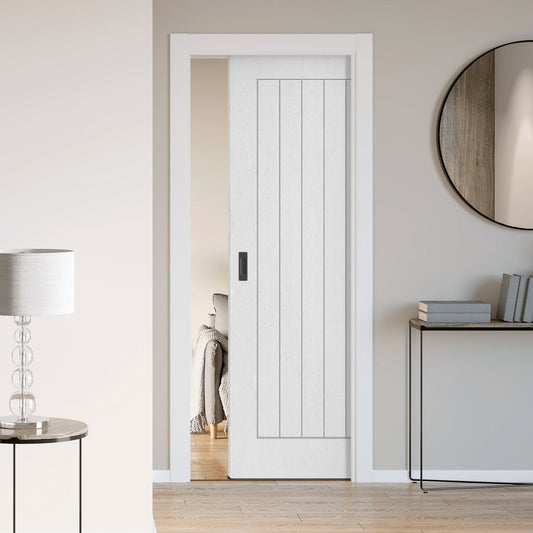


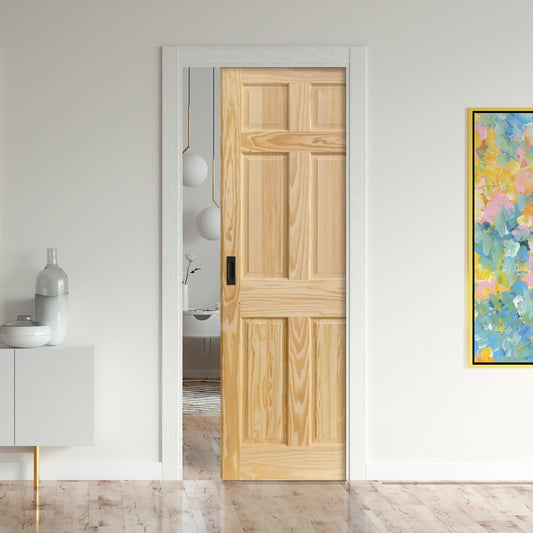
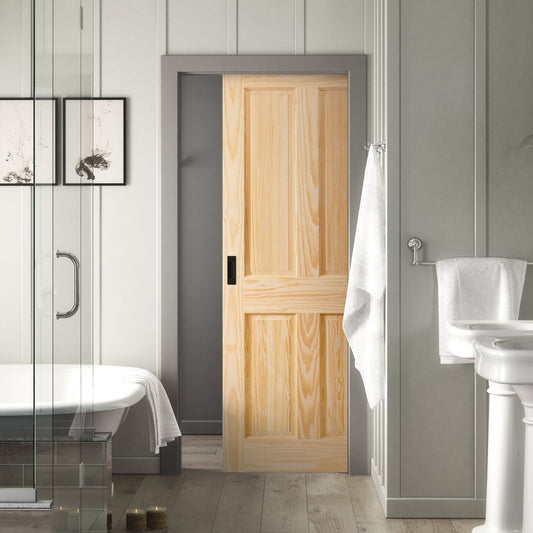


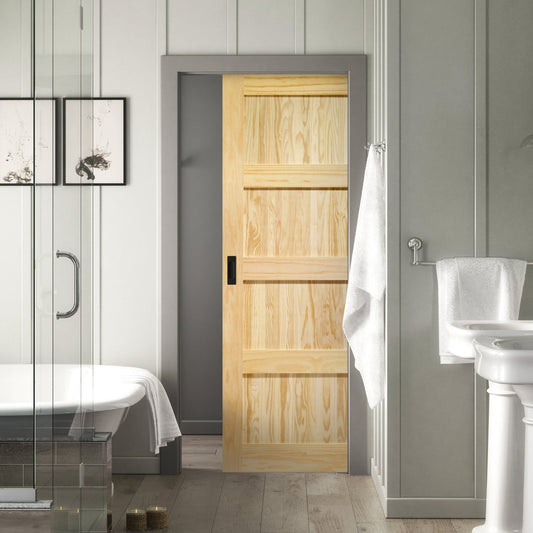


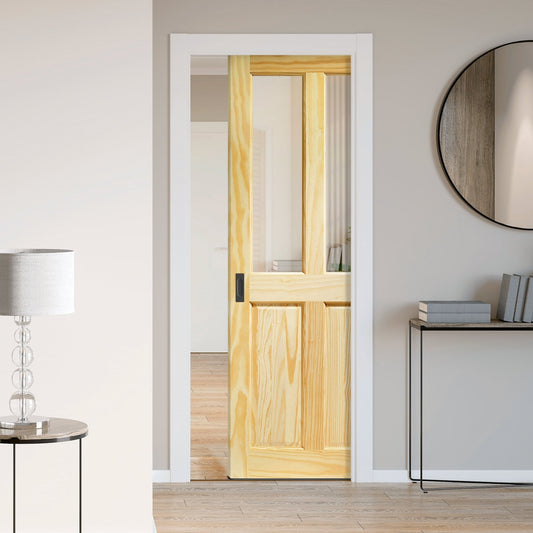
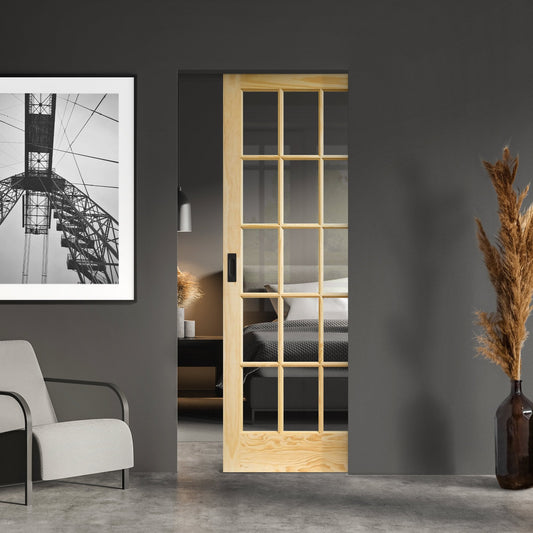
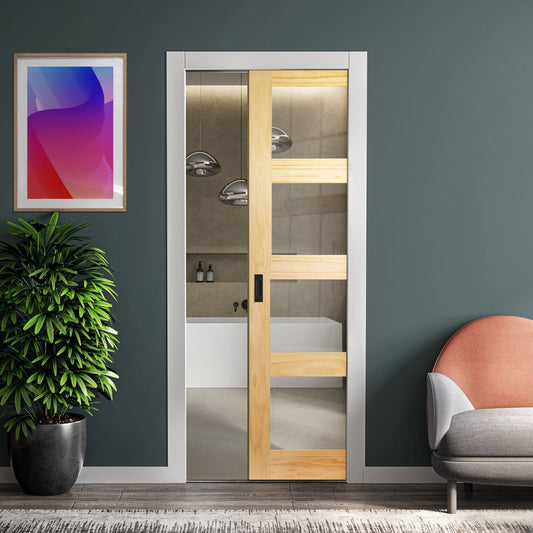


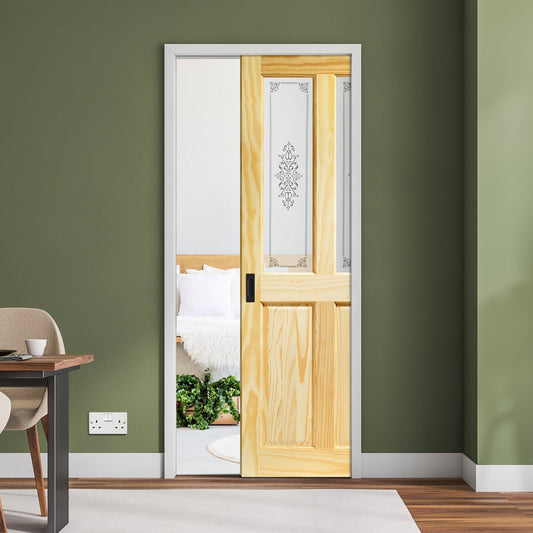
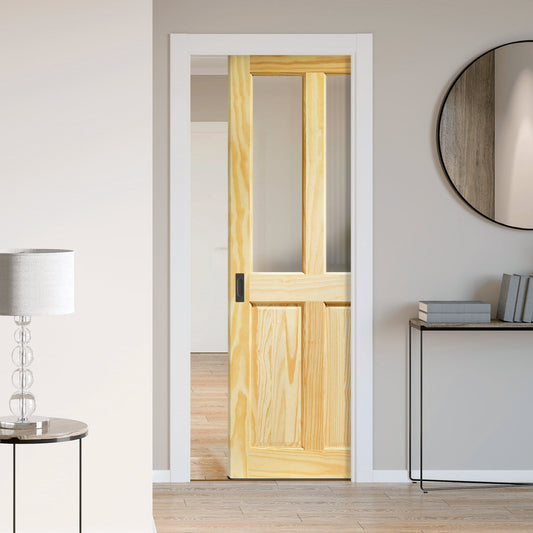


If you’re looking for a new door but short on space, we’ve got you covered with our internal pocket doors. Available in multiple sizes, styles, finishes, and glazing options, these doors slide all the way into your cavity wall. They allow you to maximise your usable floor space while still creating a clear separation between rooms when closed. You won’t find a better price on pocket sliding doors anywhere else, and we will even carry your doors into your home! Explore our full range and find out the answers to our most commonly asked questions below.
The range of internal pocket doors on sale at Leader Online
We stock a huge variety of pocket sliding doors to suit different practical needs and visual preferences.
Colours
- Oak - Our best-selling internal pocket doors are oak pocket doors, and with good reason. They combine classic rustic charm with contemporary design trends. Essentially, they’re timeless. They also ensure superior durability, thermal efficiency, and soundproofing. That’s why they slot seamlessly into different residential and commercial settings.
- White - Sleek and versatile, our white internal pocket doors will uplift any interior. Whether you’re a homeowner looking to modernise your kitchen or a small business owner wanting to kit out your new office space, we’ve got a white pocket door for you. These doors are primed and ready to paint to your liking. Remember not to paint over the hinges, frame, or intumescent strips (on fire doors).
- Pine - Pine has a similar rural chic vibe to oak, and it’s no coincidence that some of our best-selling internal pocket doors are made from this material. It provides a natural warmth that complements a contemporary colour palette, while its unfinished texture brings out its subtle grain textures and makes your interior feel totally authentic.
- Black - While pine and oak evoke rural and rustic connotations, our jet black pocket doors are more of a nod to Britain’s industrial heritage. The glazed versions with clear glass panels are symbolic of the famous Crittall windows that originated in Essex in the late 19th century. However, you can pick up a black pocket door with or without glass, depending on how you plan to utilise it in your space.
Door types
- Fire Doors - If you want to maximise fire safety in your property and comply with UK building regulations, our fire rated pocket doors will help you do that. They have an FD30 rating, meaning they are designed to withstand the spread of smoke and fire for at least 30 minutes. An intumescent seal sits around the edges and will expand if temperatures reach above 200°C, offering building occupants a vital layer of protection in the event of a fire.
- Glazed Doors - Let’s face it — we don’t get much sunlight in the UK. So, on the rare occasions the sun does come out, it makes sense to let it pour into your room and brighten up your interior. Our glazed pocket doors let natural light flow effortlessly throughout your property and create a seamless connection between spaces. They are best suited to dark hallways, corridors, stairwells, and various other open-plan spaces.
- Panelled Doors - These doors have recessed or raised panels that are a striking feature and an immediate visual focal point. They’re bold, quirky, and compatible with all manner of colours and styles. With panelled pocket doors, you get the perfect middle ground of style and practicality — they are made from solid, opaque materials, which means they offer superior privacy and sound insulation to glazed doors. They are best suited to period properties and busy, high-traffic commercial environments.
Finishes
- Fully Finished - Pocket sliding doors are known for their convenience, and we take this convenience one step further with our fully finished doors. When you receive these doors, all you have to do is hang them. You don’t need to paint them, as they arrive with a coat of lacquer that’s been professionally applied at our factory. This is the best option if you’re tight for time, not a DIY person, or working on a renovation project to tight time constraints.
- Primed - Our primed pocket sliding doors already contain a factory-applied base coat of white primer and are ready for you to apply your topcoat in your chosen colour. Whilst this option is more time-consuming vs. if you buy a fully finished pocket door, it does at least give you some degree of creative input if this is important to you.
- Unfinished - This is the logical choice for those of you who don’t mind getting your hands dirty and styling your door completely from scratch. Our unfinished pocket sliding doors arrive as timber, ready for you to paint, stain, oil, and varnish as you desire. You have total creative control and can put your own stamp on your door so that it closely matches the rest of your interior.
Glazing options
- Bevelled - The angled, polished edges of our bevelled glass pocket doors add a touch of opulence to your space.
- Clear - This type of glazing does what it says on the tin — it creates a clear, open, and connected feel between rooms and maximises the flow of natural light.
- Decorative - Our decorative internal doors’ patterned or textured designs add visual interest and act as a focal point when guests come over.
- Obscure - Our obscure internal pocket doors provide the optimal balance of privacy and access to natural light. They are designed to distort or blur the view through the glass while still allowing natural light to pass through.
Styles
- Farley - Some of our best-selling pocket doors are Oak Farley doors, and it’s easy to see why when you explore our range. They have the classic beauty of oak, the sleek simplicity of white moulded textures, and the modern edge of grey.
- Grooved - Made with real oak veneer and boasting decorative vertical or horizontal V-grooves, our grooved internal pocket doors give your interior a clean, modern look. Their linear patterns are a natural fit for contemporary bedrooms, narrow hallways, and home offices, where they can visually elongate your internal walls.
- Industrial - Our industrial internal pocket doors are bold, classic, timeless, and full of character. If you’re looking to create an ‘industrial chic’ vibe, these doors do that. They’re a nod to early Modernist and Art Deco architecture, and particularly the iconic Crittall windows which originated in the late 19th century, whilst also featuring some more contemporary design elements.
These are some of the most common questions we get from our customers regarding internal pocket doors.
Are pocket doors the same as sliding doors?
No, pocket doors are different from sliding doors in terms of their visibility when closed.
Whereas sliding doors glide along a track mounted to the wall’s surface and stay visible when open, pocket doors can slide all the way into a hidden cavity in the wall until they disappear completely from view and are tucked away (hence why they’re called ‘pocket’ doors).
Your space will look cleaner and more minimalist with a pocket door, but it needs a hollow wall cavity it can slide into, which can complicate the installation process.
Do I need a pocket door or a sliding door?
Whether you go with a pocket or sliding door for your property or building depends on a couple of factors.
Firstly, spatial preferences. Do you want your door to be completely hidden from view when open or do you have no preference either way? If the former, go for a pocket door.
Secondly, the complexity of installation, as we touched on above.
It’s simpler to fit a sliding door, as the track sits on the outside of the wall and no further structural work is required. With a pocket door, it’s a little bit more complicated. This is because they require specialist hardware and a specialised structural frame inside your wall cavity before they can be installed.
Furthermore, it takes more space to mount a pocket door, as the pocket takes up space that could house conduit (the hollow protective tube or channel that electric cables run through).
To summarise, if you want a door that stands out in its own right and can be installed quickly and easily, go for a sliding door. If you want the added space-saving benefit of a pocket door and don’t mind managing the complex installation process or hiring a professional carpenter or joiner to install your door for you, go for a pocket door.
Can pocket doors be installed in any wall?
No, internal pocket doors must be installed in a stud wall with enough depth and width to house the cassette (the metal or timber frame that the door slides into). Solid brick, block, or concrete walls won't work unless you build a stud wall in front of them, which reduces the usable space you’ve got to work with.
Your wall also needs to be free of electrical wiring, plumbing, radiator pipes, and light switches in the section where your pocket cassette will sit. If any of the above are currently running through that part of the wall, they’ll need rerouting before installation takes place.
If you're building a home from scratch or managing a major renovation project, then pocket doors are straightforward to specify at the design phase. Retrofitting them into an existing wall is more involved and worth discussing with a carpenter or builder before you commit to making a purchase.
How much space is needed for a pocket door?
In order to install an internal pocket door in your property, your wall cavity needs to be at least as wide as the door itself, plus a small amount of extra space to accommodate the cassette frame and running gear. For example, if you're fitting a standard 762mm (30-inch) door, the cavity needs to be roughly 800mm wide as a minimum.
Your wall also needs to be deep enough to house the cassette. Most standard pocket door systems need a wall thickness of around 100mm to 125mm, which is typical for a stud wall with plasterboard on both sides.
As for height, because the track which your door runs along mounts inside the head of your door frame, you'll need a standard ceiling height of at least 2100mm for most systems.
That’s why you should measure your wall carefully before ordering a pocket door and checking the specific cassette dimensions on the product page.
If you're still unsure as to whether or not your wall can accommodate a pocket door and have any further questions, feel free to call our customer service team on 01429 241 270.
How do I install a pocket door?
We would advise most people against installing a pocket door themselves, as the process is much more layered and complex than if you were hanging a standard hinged door. For this reason, we'd recommend reaching out to a joiner or carpenter.
The installation process is as follows:
- Assemble the frame & and housing for the door, including the sliding track
- Install the pocket door frame, ensuring it’s straight and level
- Finally, add the door face to the frame housing and finish with your chosen door furniture
How do I maintain an internal pocket door?
Pocket doors are pretty low maintenance, but your track and running gear need slightly more attention than a standard hinged door would due to the build-up of debris inside the wall cavity over time.
You can get around this by checking the track for dust and various forms of debris every few months. If you spot anything, give the channel a blast of compressed air or a vacuum with a narrow nozzle attachment. This should do the trick.
If your pocket door starts to feel stiff when you try to slide it open or shut it, apply a small amount of silicone-based lubricant to the rollers and any pivot points. Avoid oil-based lubricants, as they attract dust and this could compound the issue.
When cleaning the panels, tend to them as you would with any other internal door. Wipe finished or primed doors with a soft, damp microfibre cloth and mild soap or washing-up liquid. For glazed panels, use a glass cleaner or a white vinegar and water solution, and dry them using a lint-free cloth to prevent the appearance of streaks.
Check the floor guide or bottom pivot every six months and tighten any fixings that have loosened. If the door starts sitting unevenly or catching on one side, most top-hung systems have adjustment screws on the rollers that let you raise or lower the door without removing it.
Why buy internal pocket doors from Leader Online?
- Sustainability: We deliver our internal pocket doors to your door using the most eco-friendly route, with our drivers using set routes and postcodes to minimise carbon emissions.
- In-Home Delivery: We’re the only door retailer that delivers direct to your home and we can carry your doors into a ground-floor room of your choice for speed and convenience.
- Fast Shipping: You can receive your internal pocket doors in as little as 48 hours, on a weekday of your choice when placing your order and selecting Express Delivery at the checkout.
- Price Match: We won’t be beaten on price. If you find like-for-like pocket sliding doors for cheaper elsewhere online, we promise to match or beat it.
- Trusted Reputation: We have over 20,000 verified five-star Trustpilot reviews and decades of experience in delivering exceptional customer service.
At Leader Online, we help you create spaces you love without compromising on quality or value. If you have any questions or want to find out more about our internal pocket doors, call our customer service team on 01429 241 270.


