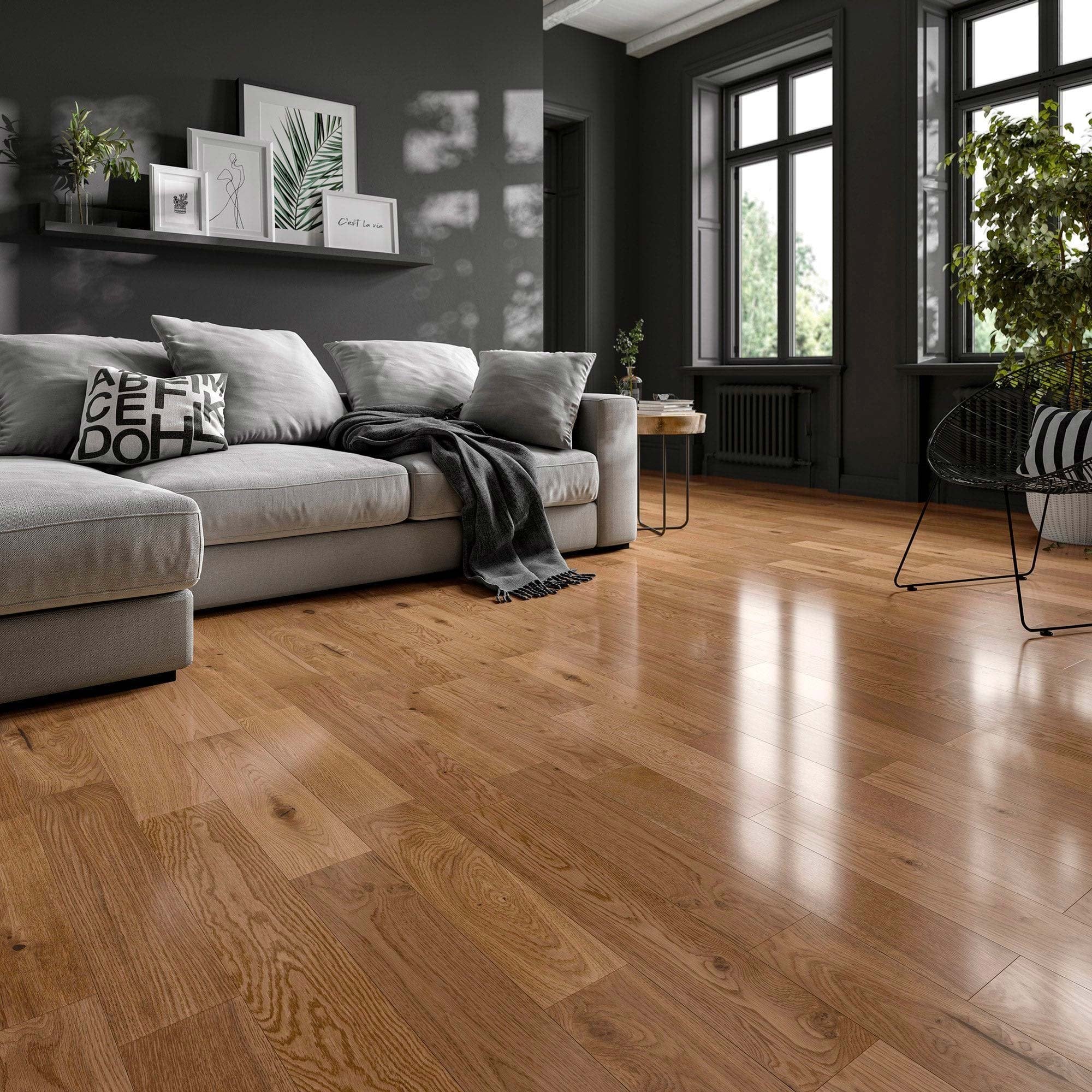
Quick Reference: What You Need to Know

  • Wood Grades are about looks, not strength: A common myth is that a lower grade means a weaker floor. In reality, real wood grades (from AB to CD) only describe how the wood looks. A lower grade simply means more natural knots, colour variations, and rustic charm.
  • The Clean vs Character scale: If you want a sleek, modern, knot-free finish, look for AB (Prime) Grade. If you love the traditional, textured look of natural timber, CD (Rustic) Grade is your perfect match.
  • Laminate toughness is measured in AC Ratings: Unlike real wood, laminate floors are graded on durability using AC Ratings (1 to 5). For a busy family home or hallway, an AC3 rating is the ideal starting point to resist everyday scratches and scuffs.

How is Wood Flooring Graded? (The 4 Key Features)

When you browse our solid and engineered wood collections, you'll notice each floor has a specific grade. When a manufacturer grades a piece of timber, they aren't testing its durability. They are simply inspecting the plank and categorising its natural appearance based on four main features:

  1. The Number of Knots: Knots are the dark, circular marks where branches once grew on the tree. A cleaner, higher-grade plank will have very few knots, while a natural, lower-grade plank will feature plenty of them.
  2. The Size of the Knots: It's not just how many knots there are, but how big they are. Larger, more prominent knots push the wood into a rustic grade.
  3. Colour Variation: Wood is a natural product, meaning no two trees are exactly alike. Higher grades offer a very consistent, uniform colour from plank to plank. Lower grades embrace the natural colour shifts, streaks, and beautiful contrasts of the raw timber.
  4. Sapwood Content (The Lighter Wood): Sapwood is the younger, lighter-coloured wood found near the outside bark of the tree. Higher grades are cut from the very centre of the trunk, meaning little to no sapwood. Lower grades contain more sapwood, adding striking light-and-dark contrasts to your floor.

The Real Wood Grading Scale

To make choosing your perfect floor as easy as possible, here is a quick breakdown of the four main grades you will find at Leader Online.

Grade Also Known As The Visual Look Best Suited For
AB Prime/Select Grade Very uniform colour with minimal, tiny “pin” knots. Sleek, modern, and minimalist interiors.
ABC Classic Grade Mostly uniform, with slightly larger knots and subtle colour shifts. Contemporary homes that want a clean, natural finish.
ABCD Natural Grade Noticeable colour variation, medium knots, and some sapwood. Busy family homes and traditional, warm spaces.
CD Rustic Grade High colour contrast, large knots, and maximum natural character. Cottages and cosy living rooms.

Real Wood Grades Explained

Now that you understand the basic features of wood grading, let's explore exactly what you can expect from each of the four real wood grades to help you find the perfect aesthetic match for your home.

What is AB Grade Wood Flooring?

AB Grade, often called Prime Grade, is the highest aesthetic classification for timber. Because it is cut straight from the centre of the log (the heartwood), it offers the most uniform, flawless appearance available in real wood. 

  • The Details: You will see very little colour variation between planks. If there are any knots, they will be tiny pin knots that are barely visible, and sapwood makes up less than 5% of the plank.
  • Why We Love It: If you are designing a sleek, modern, or minimalist space, Prime Grade gives you the luxurious feel of real wood without the floor looking too "busy" or distracting from your decor.
AB Grade Wood Flooring

What is ABC Grade Wood Flooring?

ABC Grade (or Select Grade) is the perfect middle ground. It is slightly more relaxed than Prime Grade, making it one of the most popular choices for modern homes.

  • The Details: It is still largely uniform and smooth, but you will notice slightly more natural colour variation. It features small knots (up to 20mm in diameter) and up to 10% sapwood, giving it a touch more natural character.
  • Why We Love It: It provides a pristine, contemporary finish but with just enough natural movement to remind you that you are walking on authentic, beautiful timber.

What is ABCD Grade (Natural) Wood Flooring?

ABCD Grade, sometimes known as Natural Grade or Mill Run, celebrates the tree's organic, everyday beauty. To keep the planks perfectly smooth and safe for bare feet, manufacturers expertly use coloured wood filler to seal any natural holes or deep grooves.

  • The Details: Expect a beautiful, noticeable colour contrast from one plank to the next. Knots can be larger (up to 30mm), and there is more light-coloured sapwood.
  • Why We Love It: It is incredibly forgiving! The varied grain and natural marks naturally help to disguise everyday dust, pet hair, and small scratches, making it a brilliant choice for busy family homes and hallways.

What is CD Grade (Rustic) Wood Flooring?

CD Grade, or Rustic Grade, is the most visually striking and texturally rich timber available. It doesn't hide the tree's history; it makes it the star of the show. Like Natural Grade, the deepest natural grooves are filled to ensure a smooth, durable walking surface.

  • The Details: This grade has the most unpredictable, beautiful colour variations. It features large knots (35mm and above) and the highest amount of natural sapwood.
  • Why We Love It: It brings unmatched warmth and personality to a room. If you want your floor to be a true-to-life statement piece, especially in a cosy cottage, period property, or rustic living room, this is the grade for you.

Understanding Laminate Flooring Grades (The AC Rating System)

If you are browsing our laminate flooring collections instead of real wood, the grading system changes completely. Remember how we mentioned that real wood grades only measure appearance? With laminate, it is the exact opposite! Laminate grades measure pure durability.

Instead of letters like AB or CD, laminate flooring is graded using an AC Rating (which stands for Abrasion Class). 

To earn an AC Rating, every laminate floor goes through a rigorous, independent testing process called the Abrasion Rating System (ARS). The floor is brutally stress-tested against heavy impacts, burns, stains, and scuffing to see how much daily life it can handle before showing signs of wear.

The higher the AC number (1-5), the tougher the floor.

Here is the official AC Rating scale, broken down room-by-room so that you can choose exactly the right level of protection for your home:

  • AC1 (Light Residential): Best suited for rooms with very low foot traffic where people usually walk barefoot or in slippers, such as bedrooms or guest rooms.
  • AC2 (Moderate Residential): Designed for spaces with normal use, like living rooms and dining rooms. It handles standard footfall but isn't built for heavy, muddy boots or frantic pet claws.
  • AC3 (Heavy Residential / Light Commercial): This is the sweet spot for a busy family home. It is tough enough to withstand heavy daily traffic in hallways, kitchens, and home offices.
  • AC4 (General Commercial): Built for busy commercial environments like small shops, salons, and bustling offices. However, many homeowners choose AC4 for the ultimate peace of mind in high-traffic residential areas, especially if you have large dogs or active children. 
  • AC5 (Heavy Commercial): The toughest laminate available. AC5 is engineered for high-traffic public areas like shopping centres and large department stores.